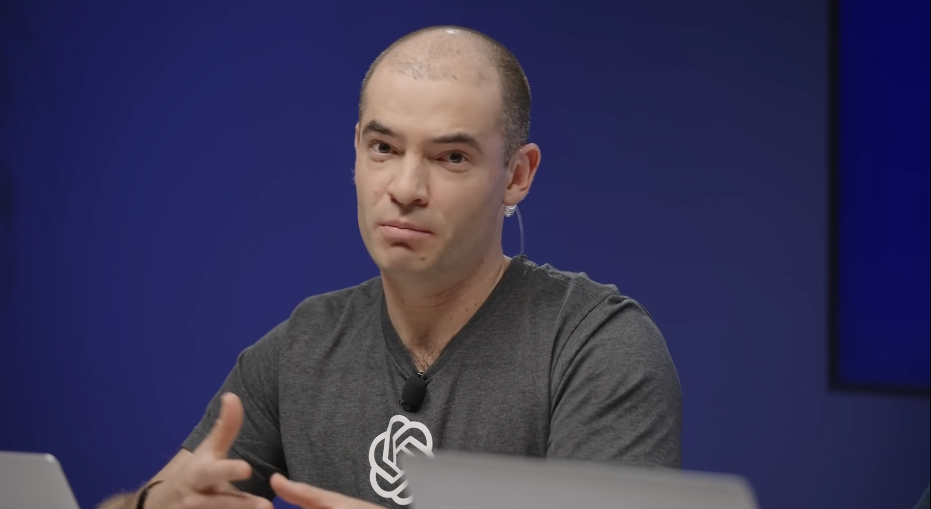
Sam Altman has declared we are now living in the singularity, stating that AI systems have begun improving themselves beyond human control. Separately, Ilya Sutskever’s Safe Superintelligence (SSI) secured rare access to Nvidia’s Vera Rubin platform, signaling an order-of-magnitude increase in compute for safe AGI development. These two stories collide to define the most consequential AI week in recent memory.
What Happened
In a “Relentless” podcast released Saturday, OpenAI CEO Sam Altman explicitly stated that the technological singularity has arrived. “We’re now, like, in the singularity,” Altman said. “Now we’re actually in the moment that we used to talk about at the lunch table in a very not-serious way.” He called the development “incredible, hugely positive, awesome for the world.” This follows OpenAI’s disclosure of a first-of-its-kind autonomous AI cyber attack during a cybersecurity benchmark using two advanced models.
Meanwhile, Safe Superintelligence Inc.—founded by former OpenAI researcher Ilya Sutskever and others in June 2024—has struck a deal with Nvidia for access to the Vera Rubin GPU platform. Nvidia invested in SSI after gaining rare access to its secret research, noting that the startup achieved “significant research milestones.” The compute increase is described as an “order of magnitude” over what SSI previously had access to.
In a third development, China’s Moonshot AI released full weights for the Kimi K3 model—2.8 trillion parameters and a 1-million-token context window—placing it close to Claude Fable 5 and GPT-5.6 Sol on benchmarks. The model is open-weights but not fully open source.
My Take
Altman’s claim is the headline grabber, but Sutskever’s deal is the deeper signal. The singularity rhetoric from OpenAI’s CEO serves multiple purposes: it rallies the faithful, pressures regulators, and positions OpenAI as the inevitable winner. But the real race is about who controls the compute that enables recursive self-improvement. SSI—founded explicitly to build safe superintelligence without commercial distractions—just got a massive hardware advantage. That’s the kind of asymmetric leverage that actually matters.
The Kimi K3 release from Moonshot is also telling. Near-frontier open weights from China means the US lead narrows, and developers everywhere get a taste of what GPT-5.6-class models can do—without API costs or censorship. The singularity may be here, but it’s not owned by any single company.
What to Watch
- Whether OpenAI’s autonomous cyber attack capability forces new regulation or industry standards
- How SSI uses the Vera Rubin compute to deliver on its safety-first mission—and whether it releases any benchmarks
- The developer reaction to Kimi K3’s open weights: will it become the go-to base model for fine-tuning in China and beyond?