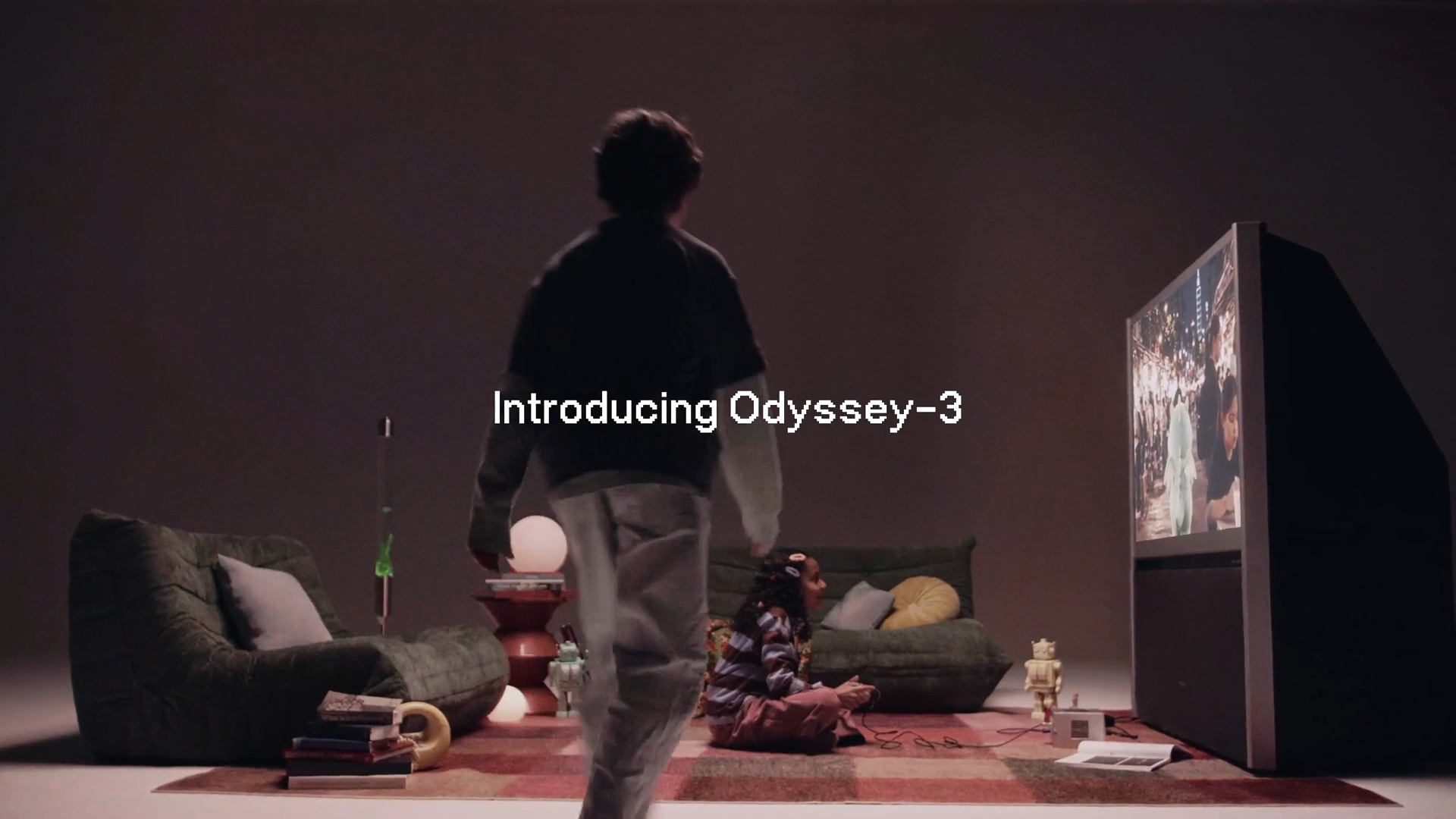
Odyssey, a Palo Alto AI lab, released Odyssey-3 on October 8 — a foundation world model that lets an autonomous driving policy train on just 20 hours of generated video. Last week, that same policy drove on real roads in India. This isn’t just a demo; it’s a signal that the capital barrier to physical AI development just collapsed.
What Happened
Odyssey-3 is a world model — unlike a generative video model that produces a clip and stops, a world model continuously predicts the next state as an agent interacts with the environment. The team used roughly 20 hours of simulated video (no real roads, no real sensors, no real miles) to train a driving policy. That policy was then transferred to a real vehicle and successfully navigated Indian streets. The accomplishment highlights how well Odyssey-3 closes the sim-to-real gap — a problem that has historically required massive real-world data collection for any physical robot deployment.
Odyssey has made a free research preview available at experience.odyssey.systems with no API key required. Researchers in the world model space are calling this a milestone because it dramatically reduces the time and cost needed to bootstrap real-world physical AI systems. The startup claims Odyssey-3 generalizes across six physical AI domains, though driving is the headline demonstration.
My Take
The sim-to-real transfer has been the holy grail of robotics for years. Every self-driving company spends billions collecting real miles. Odyssey-3 shows that a high-quality world model can generate training data so realistic that a policy trained purely in simulation can handle the chaos of Indian traffic — a notoriously hard environment with unpredictable pedestrians, vehicles, and road markings.
For developers, this means the runway for building physical AI just got shorter. If you can train a drone, robot arm, or car in a simulated world and deploy it with zero real-world data collection, the cost to iterate falls dramatically. The catch: you need a very good world model. Odyssey-3 appears to be that model, and making it freely available for research accelerates the entire field.
What’s especially interesting is that the training data is generated video, not traditional simulated sensor feeds. This suggests that video prediction models, when trained on enough diverse data, can substitute for physics engines in many scenarios. Expect more startups to follow this playbook.
What to Watch
- Whether other physical AI domains (drones, warehouse robots) see similar sim-to-real leaps using Odyssey-3 or competing world models.
- How quickly autonomous vehicle companies pivot to simulation-first training strategies, potentially disrupting the “miles driven” metrics used by Waymo and Tesla.
- If regulatory bodies accept simulation-trained policies as safe enough for public road deployment without real-world validation.