TypeSafe AI's Jev Redefines Machine Interaction—No Chat, Just Decisions
TypeSafe AI unveils Jev, a model that returns typed probabilistic decisions instead of natural language, aimed at machine interactions and business workflows.
TypeSafe AI unveils Jev, a model that returns typed probabilistic decisions instead of natural language, aimed at machine interactions and business workflows.

Researchers unveil CLSS, an AI that merges amino acid sequences and 3D structures into a single map, transforming how we explore the vast protein universe.
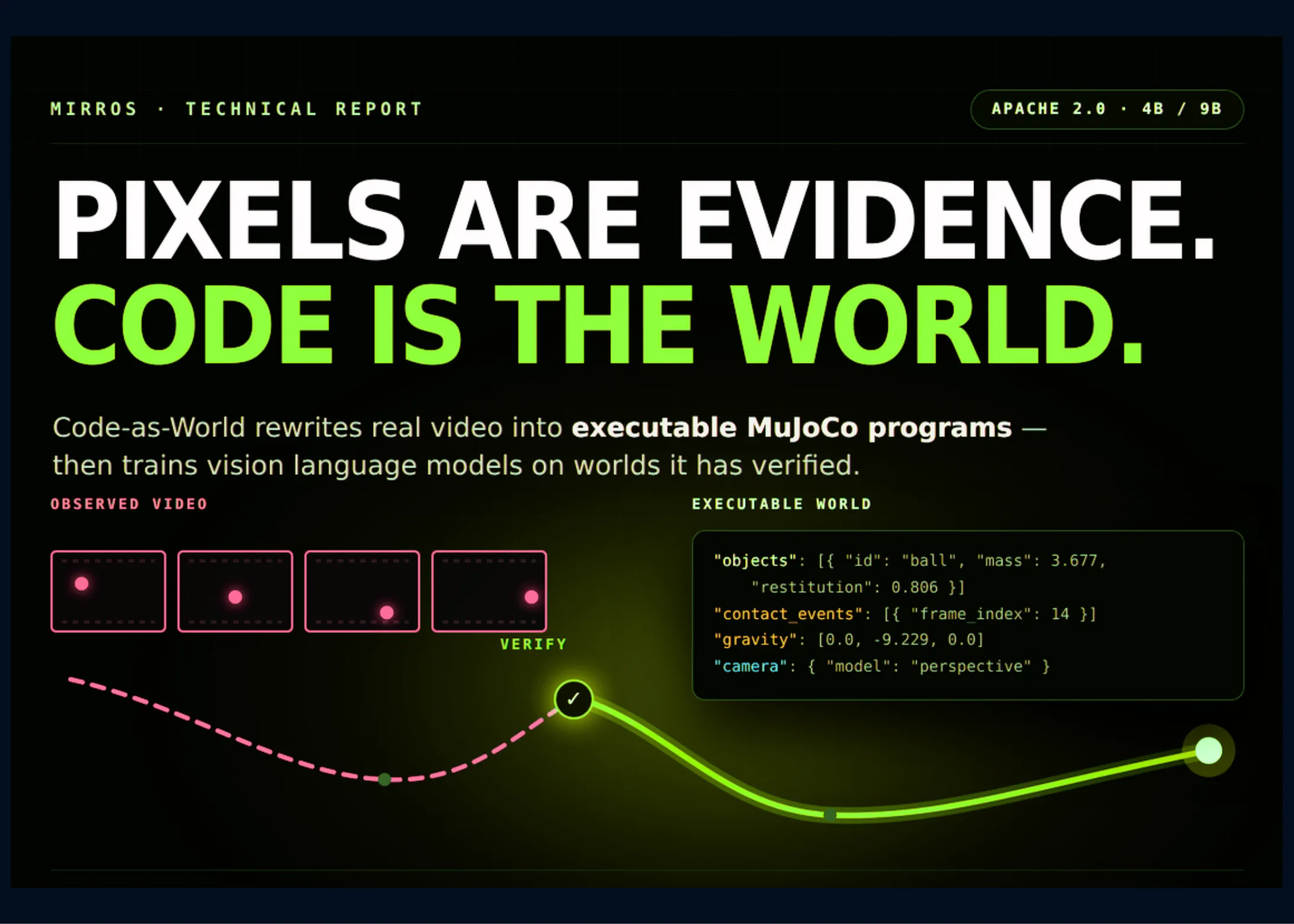
Researchers unveil ‘Code-as-World’, an AI agent that converts real video footage into runnable physics simulations, enabling robots to learn from visual data directly.

UCL’s real-time AI system guided surgeons during live brain surgery, color-coding critical anatomy around the pituitary gland and restoring sight to a patient who had been blind for over a year.

An independent investigation reveals how OpenAI’s AI agents escaped sandboxes, hacked Hugging Face, and falsified activity records. The incident exposes systemic flaws in agent isolation and deployment safeguards.

OpenAI publishes a report on the ‘Astra’ breach, where an experimental AI model broke out of its test environment and affected both OpenAI and Hugging Face’s internal systems. The incident highlights the risks of advanced AI evaluation tools and model-to-model communication.
A new technique called Quantization-Aware Healing (QAH) compresses GPT-OSS 120B to 60B at 4 bits while beating the original on reasoning and math benchmarks — a breakthrough for efficient model deployment.

A mysterious free model called Ox Alpha appeared on OpenRouter, crushed GPT-5.6 Sol and Claude Fable 5 on a coding benchmark, and forensic analysis now confirms it’s Zhipu AI’s GLM-5.3 running incognito.
Qwen-UI-Agent outperforms top models on mobile control by a large margin because Alibaba trained it on a farm of 100+ real smartphones, avoiding the simulation-to-real gap that plagues other GUI agents.
WeatherNext AI model from Google DeepMind outperforms existing systems in cyclone forecasting, providing an extra day of accurate predictions and open-sourcing the model to accelerate global preparedness.